May 29, 2026
The modern construction and land development industries move forward at an impressive pace, driven by an intense demand for precision, structural stability, and environmental responsibility. Within this rapidly changing landscape, preparing a raw piece of property for structural development requires a series of highly specialized site preparations. Two of the most critical processes in this preliminary phase are land clearing and excavation.
While these two terms are frequently used interchangeably due to their overlapping timelines on the job site, they represent entirely distinct disciplines. Each process serves a unique purpose, utilizes a different suite of heavy machinery, and requires specialized operator skills to achieve structural readiness. Understanding the technical nuances between a land clearing operation and an excavating service is essential for proper project planning, accurate budgeting, and ensuring the long-term integrity of any subsequent structures.
Understanding Definitions and Core Objectives
Land clearing is the preliminary process of stripping away all surface obstructions from a specific plot of land to prepare it for development, agricultural use, or infrastructure placement. The primary objective of this process is to remove the biological layer of the property, which includes cutting down standing timber, grinding out stubborn tree stumps, and clearing away dense brush, boulders, and organic debris.
This phase is entirely preparatory and focuses on creating an unobstructed, visible canvas so that subsequent engineering tasks can proceed without interference. Because stripping away vegetation exposes the bare earth to the elements, professional clearing crews must integrate strict erosion control measures, such as installing silt fences or spreading organic mulch, to stabilize the topsoil and comply with municipal environmental policies.
ReviewingExcavation
Excavation is the highly technical process of removing, moving, and shaping earth materials to modify the actual topography of a site according to strict engineering blueprints. This process goes far beneath the surface, involving the digging of deep cavities for building foundations, cutting narrow trenches for underground utility lines, and shifting massive volumes of earth to create stable sub-bases for roadways and parking lots.
The core objective of an excavating service is to establish a secure, level, and load-bearing foundation capable of supporting heavy structural weights. This work requires meticulous calculation because the physical weight of the Earth is immense. According to the Centers for Disease Control and Prevention, the weight of a single square yard of dirt can easily surpass 3,000 pounds. This profound physical weight underscores why excavation requires advanced engineering precision, structural shoring, and heavy-duty machinery to handle the earth safely without risking catastrophic soil collapses or cave-ins.
Distinguishing Core Goals
The fundamental difference between land clearing and excavation lies in their mechanical goals: clearing deals with the organic material above the ground, while excavation deals with the structural material below it. Land clearing removes the obstructions that block access to the property, creating a clear workspace.
Excavation then steps in to alter the actual geography of the earth, cutting into the subsurface to create the specific pits and elevations required by structural engineers. A construction project cannot succeed with just one of these processes; they function as sequential phases of a unified development strategy, where land clearing establishes the safety parameters above ground so that the excavating service can safely reshape the earth below.
Navigating Industry Terminology
Both industries utilize a highly specialized vocabulary that project managers and developers must comprehend to coordinate field operations effectively. In the land clearing sector, the phrase "clearing and grubbing" is standard language used to specify the complete removal of all surface vegetation along with its subterranean root systems.
Conversely, in the excavation trade, teams use technical terms like "trenching" to define narrow, deep sub-surface cuts intended for utilities, or "mass excavation" to describe the large-scale removal of hundreds of tons of earth for expansive commercial foundations. Mastering this specific industry terminology prevents expensive communication errors and ensures that contract deliverables align with regional engineering standards.
Analyzing Tools and Equipment Used
The specific challenges of processing heavy biological material require highly specialized clearing machinery designed to shred and grind organic fibers efficiently. Clearing crews utilize heavy-duty forestry mulchers, commercial stump grinders, hydraulic tree shears, and brush rakes mounted on heavy tracked loaders.
These tools are engineered to cut through dense timber and grind down sub-surface root balls in a single pass, converting standing vegetation into standard organic mulch directly on-site. This immediate processing facilitates eco-friendly recycling of materials, as the resulting mulch can be spread across the exposed earth to preserve soil moisture and prevent topsoil erosion.
Utilizing Excavation Machinery
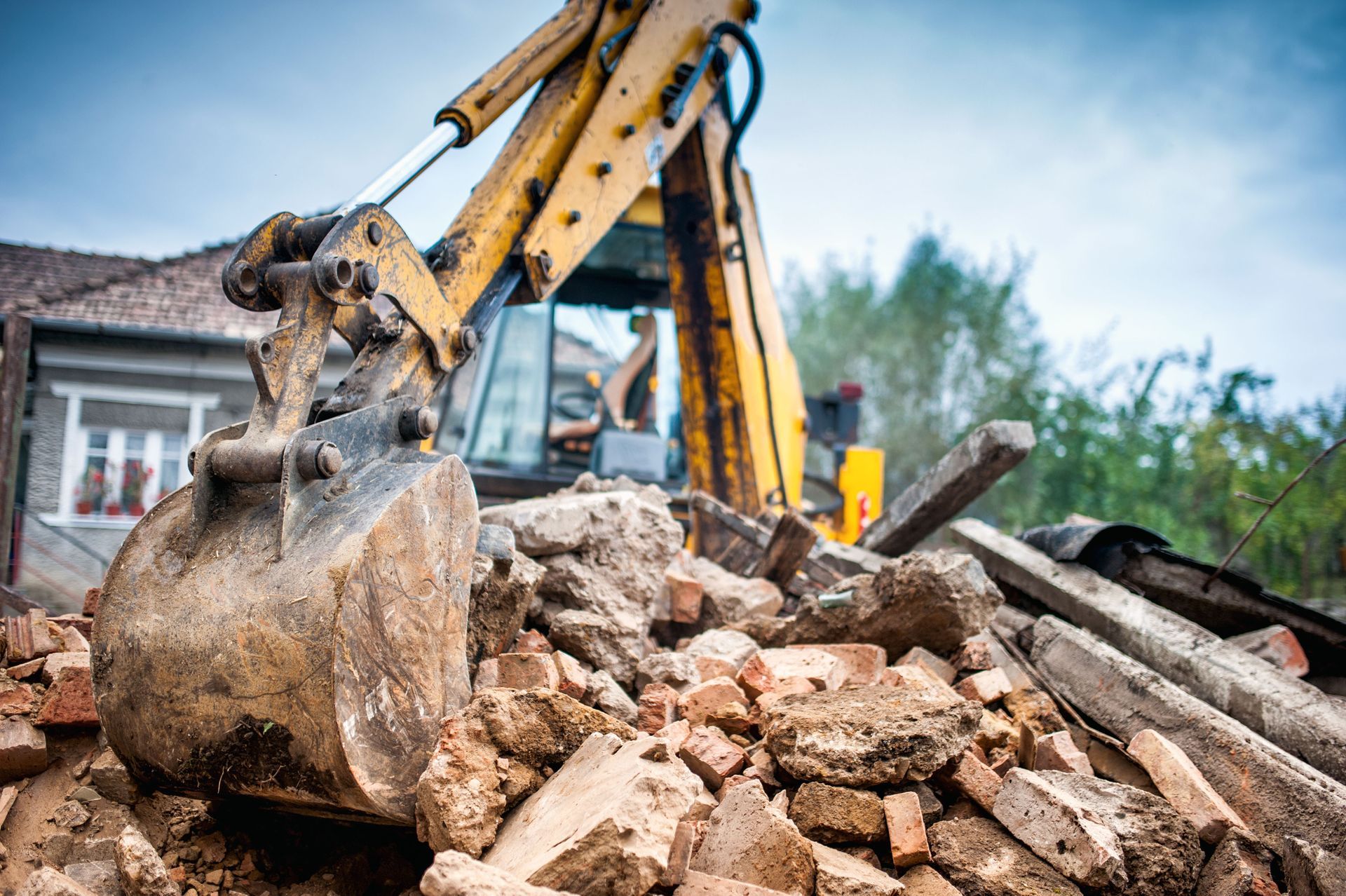
Excavation tasks require a completely different category of heavy machinery, engineered to deliver massive breakout force and precise depth control. The primary tools of an excavating service include hydraulic excavators, backhoe loaders, heavy bulldozers, and tracked skid steers equipped with specialized digging buckets.
For large-scale commercial infrastructures, crews deploy massive crawler-mounted excavators capable of lifting multiple cubic yards of dense earth in a single motion. These machines are increasingly integrated with advanced laser-guidance systems and digital depth sensors, allowing operators to cut trenches and grade slopes with an accuracy that matches engineering blueprints down to the exact millimeter.
Operating Shared Equipment Teams
While their primary objectives are distinct, land clearing and excavation operations frequently share a common core of heavy machinery on the job site. Tracked bulldozers and hydraulic excavators represent the foundational workhorses of both trades, demonstrating exceptional mechanical versatility.
An excavator can be outfitted with a hydraulic brush cutter or a heavy root rake during the initial land clearing phase, and then quickly switched to a heavy-duty digging bucket when it is time to perform precision trenching work. Leveraging this multi-functional machinery streamlines project transitions, minimizes equipment transport expenses, and maintains a low-cost operational structure for property developers.
Managing Environmental Impact
With modern construction guidelines placing an intense focus on sustainable development, managing the environmental footprint of heavy machinery is a primary consideration. Modern equipment manufacturers utilize advanced low-emission diesel engines and eco-friendly hybrid power plants to drastically reduce carbon emissions and noise pollution on the job site.
Additionally, operators are trained to utilize precise tracking paths to minimize unnecessary soil compaction across sensitive root zones. This disciplined approach to field mechanics allows developers to fulfill complex infrastructural goals while maintaining a strong commitment to ecological preservation and local regulatory compliance.
Understanding Processes and Techniques
A professional land clearing operation utilizes several distinct techniques depending on the specific vegetation density and soil layout of the property. For large, open commercial lots, mechanical clearing utilizing heavy bulldozers and macro brush rakes provides the fastest way to strip away dense brush and topsoil obstructions.
However, when working near protected wetlands or sensitive ecological zones, crews implement selective clearing methods, using manual labor and light machinery to extract specific invasive plants while leaving mature native trees entirely undisturbed. This surgical approach preserves local wildlife habitats, controls immediate water runoff patterns, and respects regional conservation guidelines.
Transforming a raw, overgrown plot of land into a perfectly graded, structurally sound foundation requires a seamless coordination of biological science, engineering accuracy, and master machine craftsmanship. From the initial removal of deep root systems to the precise cutting of utility trenches through dense clay, every single phase of site preparation affects the stability and safety of your future structures. Entrusting your site development to a certified, experienced excavating service ensures that your property transitions smoothly through these preliminary phases without hidden costs or legal vulnerabilities.
Marra Brothers Contracting provides the advanced management structures, heavy machinery fleets, and technical expertise required to execute flawless site preparation projects. Our full-service firm specializes in managing complex commercial and residential Earth-moving operations, delivering high-precision site development tracks from the initial clearing phase to the final topsoil finish. If you are preparing to break ground on a new construction project, clear a commercial lot, or secure an expert excavating service for your property, contact us today to consult with our specialists and secure an engineered foundation for your home.